
“Oily stains can be tough to clean on any surface, whether it’s olive oil or butter on your new shirt, grease from a grill on your patio, or fluid from a vehicle - oil likes to penetrate deep into any surface it comes in contact with”
Oil likes to soak in and penetrate into whatever surface it touches. Oil-based deck stains are known for great penetration. WD-40 and other oil-based lubricants are great for this purpose as well. Unfortunately, oil can end up in places we don’t want it to, and that can be a problem. While the initial stain can be cleaned, there’s usually a chance that it has penetrated too deep into the surface to be completely removed. The quicker the affected area is treated, the better the chances of removing it. I keep a Tide Pen handy when I go out to eat now. I learned the hard way that oil does not come out of cotton either. My favorite shirt still has a shadow of a butter stain despite multiple washes.
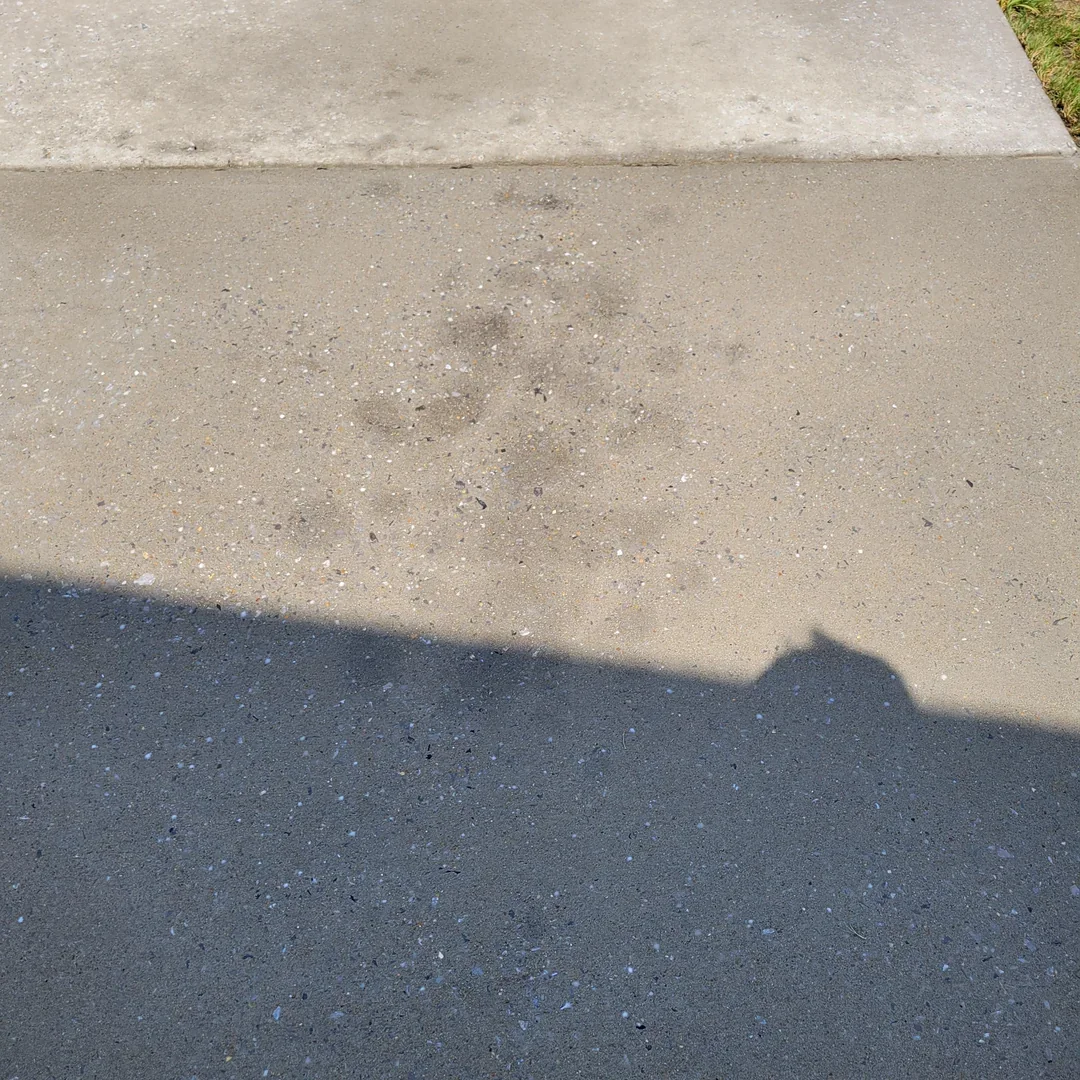
A stain is the actual initial contamination (e.g., the fresh, dark, wet oil spill), while the shadow (also known as a "ghost stain") is the residual, lightened but still visible mark that remains after the initial surface cleaning has removed the bulk of the contaminant.
Concrete may look solid, but it is a porous material—like a very dense, hard sponge. When oil drips onto it, it doesn't just sit on top; it seeps into a web of microscopic "sponge-like tunnels".
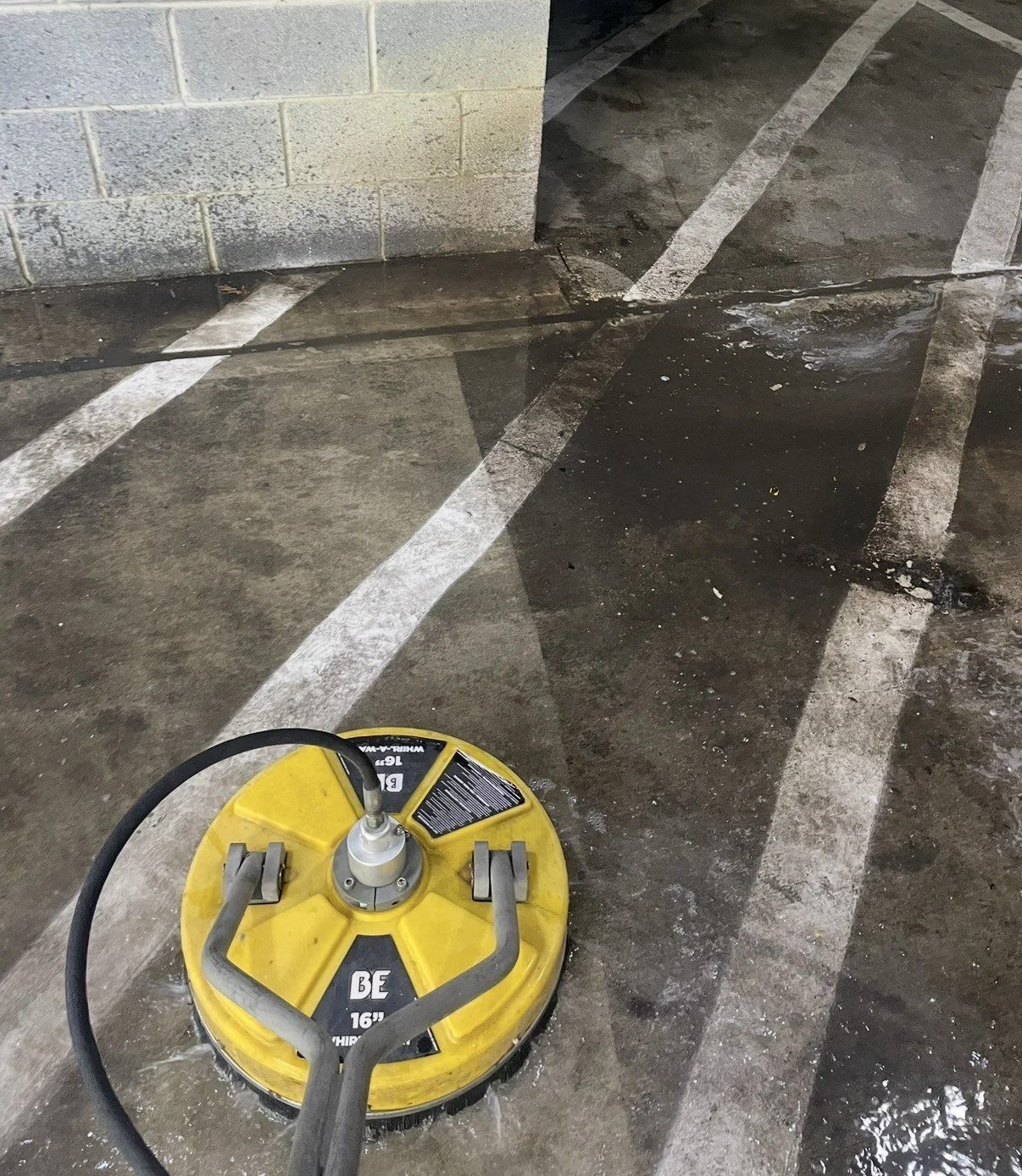
The Cleaning Phase: Applying degreasers and Pressure washing effectively breaks down and removes the surface oil. This is why the area looks significantly better and lighter immediately after cleaning.
The Shadow Phase: High pressure cannot reach into the deepest microscopic pores where the smallest oil molecules are trapped. These trapped residues create a "shadow" or "ghost stain" that is visible even when the surface itself is technically clean.
Why shadows remain:
Porous Concrete: Oil soaks deep into concrete's tiny pores.
Hydration Variation: The shadow can be slight changes in how the concrete absorbs water, even after oil is gone.
Heat Baking: Hot sun can "cook" the oil into the pores, making it extremely difficult to extract.
The good news is that once the initial degreaser and pressure washing have been performed and the area is generally kept clean, the sun and natural weathering, along with periodic maintenance cleaning, will continue to fade the shadow over time. The sun does a good job of fading and bleaching out surface areas that are exposed to a lot of UV rays.